
-
ProductAs the first company in the country to develop and produce explosion-proof touch screens, computers, HMIs, and related products, Xuyong has been a pioneer in industrial safety and innovation for over 20 years.
-
EquipmentAs the first company in the country to develop and produce explosion-proof touch screens, computers, HMIs, and related products, Xuyong has been a pioneer in industrial safety and innovation for over 20 years.
-
SolutionAs the first company in the country to develop and produce explosion-proof touch screens, computers, HMIs, and related products, Xuyong has been a pioneer in industrial safety and innovation for over 20 years.
-
AboutAs the first company in the country to develop and produce explosion-proof touch screens, computers, HMIs, and related products, Xuyong has been a pioneer in industrial safety and innovation for over 20 years.

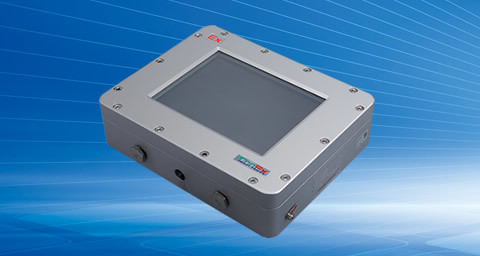
The "Steel Goggles" on Oilfields: Applications of NVR Monitoring Explosion-Proof Displays in the Oil and Gas Industry
2026-07-06 08:58
In the oil and gas industry, production sites are closely tied to the words "flammable and explosive." From drilling platforms to refining workshops, the air may contain combustible gases or suspended flammable dust. In such environments, an ordinary LCD display can become a potential ignition source—and this is no exaggeration.
NVR monitoring explosion-proof displays are visualization devices purpose-built for such extreme environments. They serve both as the "eyes" of the monitoring system, delivering real-time images from front-end cameras to operators, and as a reliable safety barrier, ensuring that normal operation within hazardous areas does not ignite the surrounding atmosphere through electrical sparks or excessive heat.
Three Core Application Scenarios: From Wellhead to Control Room
Explosion-proof displays are used throughout the entire oil and gas value chain, primarily in the following scenarios:
1. Drilling and Production Platforms
Offshore platforms and onshore well sites are typical Zone 1/2 hazardous areas. Here, explosion-proof displays are commonly paired with NVRs (Network Video Recorders) to monitor wellhead pressure, blowout preventer status, and real-time video of critical platform equipment. Due to space constraints, this scenario often calls for compact 10- to 19-inch sealed panel-mount displays, which save space while resisting salt spray corrosion.
2. Refining and Petrochemical Plants
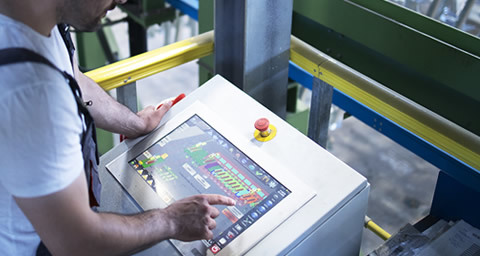
In refineries and chemical plants, production units are filled with reactors, distillation columns, and pipelines. Explosion-proof displays here take on a dual role: they connect to NVRs to show video surveillance feeds, and also serve as data terminals presenting process parameters—such as temperature and pressure—from PLC/DCS systems. When parameters go out of range, the system can trigger alarms and pop up alerts on the large screen. In central control rooms, explosion-proof video walls may be used to integrate multiple signals (video surveillance, SCADA systems, electronic maps) into a unified display.
3. Storage and Loading/Unloading Areas
Tank farms, hazardous chemical warehouses, and loading/unloading docks are high-risk areas for leaks. Explosion-proof displays in these Zone 2 or Zone 22 (dust hazard) environments operate 24/7 to monitor tank liquid levels, valve status, and perimeter intrusions. Some outdoor installations additionally require high-brightness displays (e.g., 1000 nits or higher) and wide-temperature operation capabilities (-20°C to +60°C) to withstand harsh weather conditions.
Essential Technical Standards to Understand: The Explosion-Proof "ID Card"
When selecting an explosion-proof display, the core reference is the explosion-proof technical framework established by the International Electrotechnical Commission (IEC) and relevant national standards. Understanding the following parameters is the first step in selection:
1. Hazardous Area Classification
Based on the frequency and duration of explosive atmospheres, locations are divided into different zones:
Gas environments: Zone 0 (continuous presence, extremely hazardous), Zone 1 (occasional presence during normal operation), Zone 2 (rarely present under normal conditions).
Dust environments: Zones 20, 21, 22 (by analogy).
2. Decoding Key Explosion-Proof Markings
Take the common marking Ex d IIB T6 Gb as an example:
Ex d stands for flameproof enclosure. This is the most widely used explosion-protection technique in the oil and gas sector. The enclosure can withstand an internal explosion without damage and prevent the flame from propagating to the external environment.
IIB denotes the gas group, indicating suitability for common industrial flammable gases (e.g., propane, ethylene). If more hazardous gases such as hydrogen or acetylene are present on site, a IIC rating is required.
T6 indicates the temperature class; T6 means the maximum surface temperature ≤85°C, which is the highest level (T1 through T6, with higher numbers being more stringent).
Gb represents the Equipment Protection Level (EPL Gb), suitable for Zone 1 areas.
In addition, the Ingress Protection (IP) rating is equally important. IP65 or higher is a basic requirement to effectively resist dust ingress and high-pressure water jets. In highly corrosive environments (such as offshore platforms), the enclosure material should be upgraded to corrosion-resistant materials, such as 316L stainless steel.
Four Core Selection Criteria: More Than Just Explosion-Proof
Beyond meeting the explosion-proof rating, engineering selection should also consider the following factors:
1. Compatibility with the NVR System
The explosion-proof display must be compatible with the backend NVR video management system. Most mainstream products support multiple signal inputs such as VGA, HDMI, and AV. For new system installations, priority should be given to models with network interfaces (RJ45) or fiber optic interfaces to enable long-distance lossless transmission.
2. Human-Machine Interaction Experience
Operating a screen in a hazardous area carries safety risks. It is advisable to choose models with explosion-proof touchscreens or explosion-proof mice/keyboards. Some manufacturers offer intrinsically safe touchscreens (Ex ic), ensuring that the touch operation circuit itself does not generate sufficient energy to cause ignition.
3. Environmental Tolerance
Oilfield sites often experience vibration and high temperatures. During selection, it is essential to confirm that the equipment meets wide-temperature operating requirements (e.g., -20°C to 60°C) and has adequate vibration resistance (e.g., in reference to MIL-STD-810G military standards) to ensure long-term operational stability.
4. Complete Certification
The product must hold a certificate of explosion-proof conformity issued by an authoritative explosion-proof testing body (such as NEPSI, PCEC), and the certificate must remain valid. For export projects or projects requiring international alignment, attention should also be paid to whether the product holds ATEX (EU) or IECEx (international) certification.
In summary, NVR monitoring explosion-proof displays play the role of "safety guardians" in the oil and gas industry. They must not only deliver clear images and stable connections, but also withstand explosion risks and harsh environmental conditions. Strict adherence to standards and specifications during selection is the fundamental safeguard for personnel safety and production continuity.
LATEST NEWS

Contact Us
7F, Bldg. 5A, Skyworth Innovation Valley, No. 1 Tangtou Rd., Shiyan, Bao’an District, Shenzhen, China 518108
Follow Us


Copyright © 2025 Shenzhen Xuyong Industry Co., Ltd. All Rights reserved.